
150 Hours in Crimson Desert: Why This Baffling Game Still Hooks Me
After over 150 hours traversing the continent of Pywel, Crimson Desert remains a baffling, genre-defying experiment that somehow keeps players hooked.
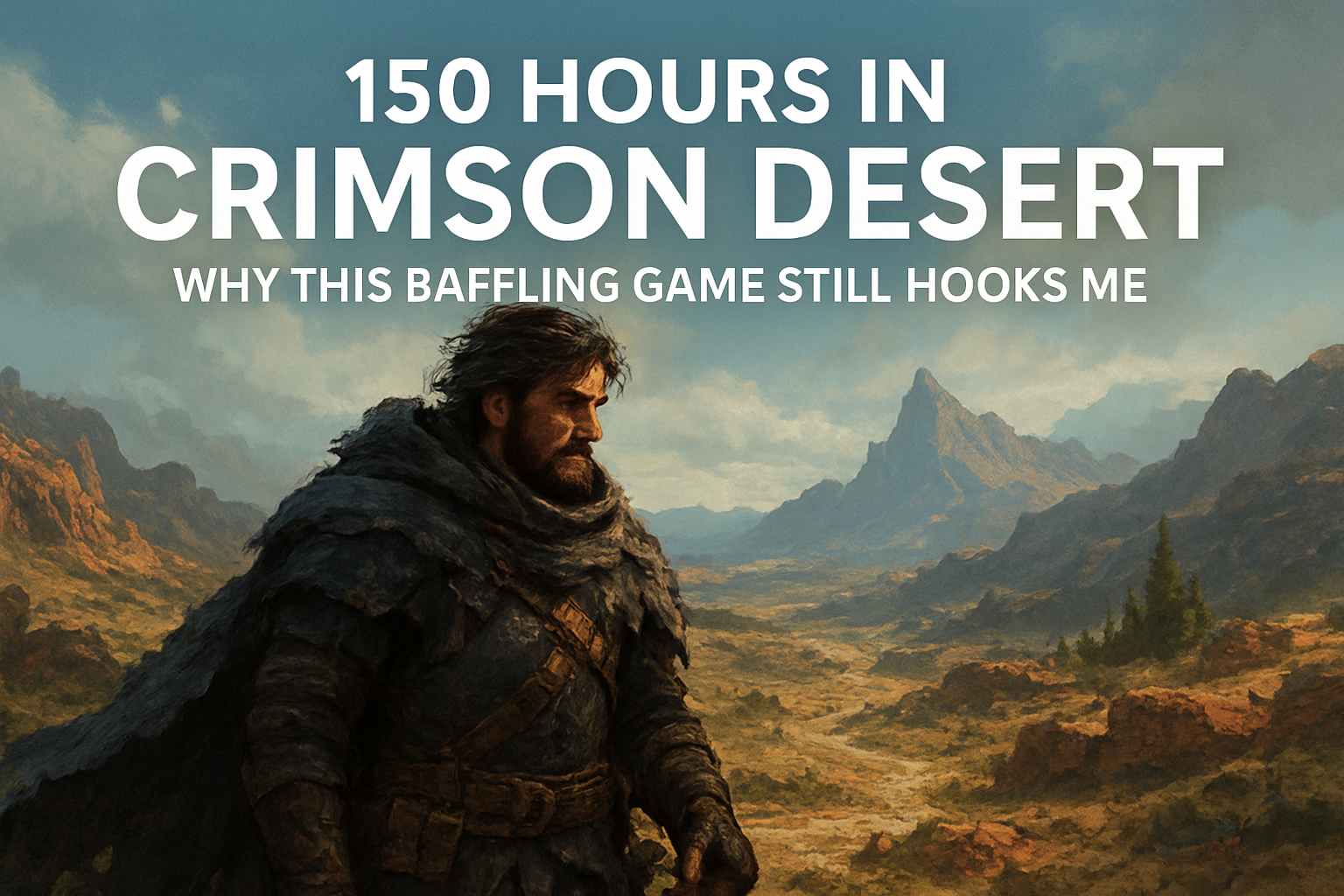
Key Points
- Crimson Desert is a genre-defying experience blending MMO and RPG elements in a massive open world.
- Pearl Abyss has significantly softened the game's difficulty and mechanics post-launch based on player feedback.
- Despite the game's size, most players are spending hundreds of hours in the starter regions due to the dense side content.
- The game currently suffers from technical bugs, particularly with trading systems and control responsiveness.
- The main story is secondary to the game's complex, systemic world-building and player freedom.
In an industry often criticized for formulaic design, Crimson Desert stands out as a baffling, genre-defying experiment. After sinking over 150 hours into the continent of Pywel—mostly within the starter region of Hernand—I still find myself struggling to categorize this title. Developer Pearl Abyss has been adamant that this isn't an MMO, yet it defies the traditional boundaries of an RPG as well. It occupies a space similar to Dragon's Dogma 2, characterized by a willingness to tinker with fast travel, unconventional save systems, and a general disregard for player convenience. However, since its launch, Pearl Abyss has been frantically sanding off the sharpest corners of the experience. Initially, the game was a much harsher beast. There was no item storage, forcing players to grind through specific quests just to expand their inventory. Fast travel was non-existent in many areas, and unlocking it for your camp involved an elaborate, diabolical puzzle. Some of the early door-unlocking mechanics were notoriously frustrating. Yet, Pearl Abyss has walked back many of these intentional design choices post-launch. The result is a much softer, more accessible experience that players are increasingly gravitating toward. It is neither a pure MMO nor a standard RPG, but rather a single-player journey set within a massive, systemic world full of secrets. As our reviewer Mollie aptly put it, this is a game best enjoyed as a slow burn. If one thing must be emphasized, it is the sheer, staggering scale of the world. It is arguably one of the biggest games ever made. At the time of writing, only about 7.5% of Steam players have completed Chapter 7, the threshold for leaving the first two regions to explore Demeniss, Deleysia, and the titular Crimson Desert. This is practically unheard of in modern open-world gaming. I spent 150 hours primarily in Hernand, drawn into a rabbit hole of puzzles, boss fights, and side quests. The main story is largely lackluster, serving primarily as a vehicle to introduce the game's myriad systems. With the exception of your Greymane comrades, the protagonist, Kliff, is a bit of a blank slate—a "John Crimson Desert" figure if you will. Despite his limited dialogue, which mostly consists of "Yes," "No," and "Praise the ancestors," I have grown fond of Kliff. He occupies a space similar to Arthur Morgan; he is a straight-faced, stoic quest-bot who instinctively knows he must walk into a tavern to win three rounds of arm wrestling to save the universe. He is a weird protagonist in a weird game. Whether he is cradling a goat like a baby to "learn" about it or base-jumping into a puzzle realm in the sky, his reactions—or lack thereof—add to the game's eccentric charm. The game also features other playable characters, each with unique skill trees and quirks, such as Oongka the Orc, who wields an arm cannon instead of a glider. Crimson Desert is absolutely packed with what one might call "MMO nonsense," and it is glorious. You can unlock hot air balloons, wolves, bears, or even mech suits as mounts. You can dress up your pets in armor, manage your camp, trade, gamble, invest, farm, or steal livestock. You can even find a pair of boots that allow you to waterski. It is no wonder players aren't rushing to finish the main story when there are entire regions of side quests and distractions to digest. The game is at its absolute peak when you stop trying to progress and simply follow the flow of the world. Of course, the game is not without its flaws. The mouse and keyboard controls, while improved, can still be quite frustrating. Certain aspects are outright buggy—the trade system frequently malfunctions, and I have encountered issues where my hot air balloon mount refuses to be called after construction. Many of these bugs feel symptomatic of the sheer system bloat that Pearl Abyss insists upon. The version of Crimson Desert we have today is almost unrecognizable from the pre-launch build, which is a testament to how quickly the developers are implementing feedback to soften the game's rougher edges. Ultimately, while the game is currently suffering from a bit of an identity crisis, it is one of the most compelling open-world experiences I have played in years. It is a massive, sprawling, and deeply flawed masterpiece that invites you to lose yourself in its systems. Whether you are hunting for Artifacts, respecing your skills, or trying to figure out how to pull off a heist, there is always something to do. Pearl Abyss has created something truly unique here—an experience that might not make perfect sense, but one that is impossible to put down. Moving forward, the success of Crimson Desert will likely hinge on how well Pearl Abyss can maintain this momentum. They have proven that they are willing to listen to the community and pivot when necessary. The challenge remains in balancing that ambition with technical stability. As more players reach the endgame and unlock the deeper regions, the developer will need to ensure that the systems don't buckle under their own weight. For now, however, players seem more than content to keep exploring the mysterious corners of Pywel, one bizarre quest at a time.
Post-Launch Evolution
Crimson Desert has undergone significant changes since its release, with Pearl Abyss actively responding to player feedback. The developer has refined harsh design choices, such as simplifying fast travel and removing overly complex inventory restrictions. These adjustments have transformed the game from a punishing experience into a more accessible open-world title. By sanding off these sharp corners, the studio has allowed the game's systems to shine without the frustration that initially hampered early-game exploration.
A World of Infinite Distractions
The scale of Pywel is staggering, offering players an almost endless supply of side activities. From managing camp logistics to riding unique mounts like bears and wolves, the game encourages players to lose themselves in the world rather than rushing the main narrative. This density of content is why many players remain in the initial regions for over 100 hours. The game prioritizes systemic freedom, allowing players to engage with the environment in creative ways that often overshadow the core story objectives.
This article was drafted with AI assistance and editorially reviewed before publication. Sources are listed below.