
Android Auto Bug Disables Voice Commands for Users
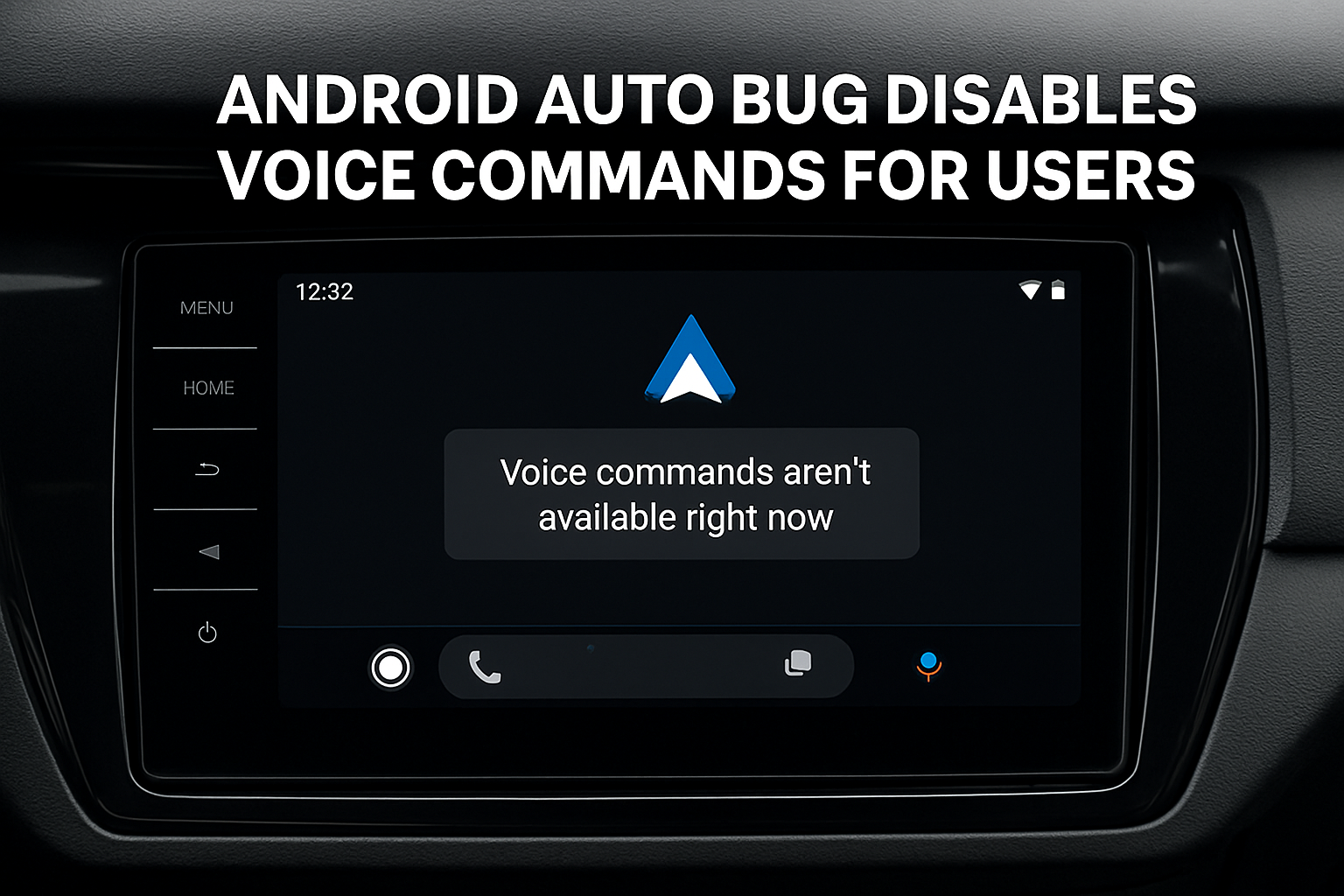
Android Auto users are reporting a widespread issue where voice commands are failing, triggered by a 'voice commands aren’t available right now' error.
Key Points
- Widespread 'voice commands not available' bug hits Android Auto
- Issue disrupts hands-free safety features for drivers
- No clear fix available from Google at this time
- Troubleshooting efforts like clearing caches show limited success
A significant technical disruption is currently affecting Android Auto users, as reports surface regarding a persistent bug that prevents the use of voice commands. When users attempt to trigger Google Assistant, they are greeted by an error message stating, 'Voice commands aren’t available right now.' This issue, which has been gaining traction across various online forums and social media platforms, effectively cripples the hands-free functionality that is vital for safe vehicle operation. Since Android Auto is designed to prioritize driver safety by minimizing physical interaction with screens, the loss of voice control is a major regression in functionality. The utility of voice commands in a vehicular setting cannot be overstated. Drivers rely on these features to navigate, manage communication, and control media playback without diverting their eyes from the road. The current bug, first noted in late February 2026, appears to be widespread, affecting a diverse range of smartphone models and automotive infotainment systems. Unlike localized issues, this widespread nature suggests a fundamental problem with the integration between Google Assistant and the Android Auto interface, potentially caused by a faulty server-side update or a glitch in the latest client-side application version. Analyzing the technical landscape, Android Auto operates as a bridge between the smartphone's processing power and the vehicle's display. This architecture, while efficient, introduces multiple points of failure. Updates to Google Play Services or the core Android operating system can often inadvertently break the handshake protocols required for voice command processing. Because Android Auto is not a standalone system but rather a projection of the phone, any instability in the Google ecosystem directly impacts the driving experience. Users have attempted basic troubleshooting steps, such as clearing app caches or reinstalling the Android Auto app, but these have yielded inconsistent results, further implying that the fix must come from the developer side. Historically, Android Auto has faced challenges regarding fragmentation. With thousands of car models and hundreds of phone configurations, ensuring a seamless experience is a monumental task for Google's engineering teams. This incident follows a series of updates aimed at improving the interface and performance of the platform, yet it underscores the fragility of complex connected systems. When a core feature like voice interaction fails, it forces users to rely on manual inputs, which increases the cognitive load for drivers and potentially compromises road safety. As of now, Google has not provided a definitive timeline for a patch. For those currently affected, it is advisable to check for any pending updates in the Google Play Store for both the Android Auto app and the Google app, as these are the primary drivers of the voice-command functionality. Until a fix is deployed, users are encouraged to rely on their vehicle's native infotainment controls if available, or to pull over safely if they need to access specific phone settings. We will continue to monitor the situation and provide updates as soon as an official resolution is communicated by the Android development team.
Nature of the Technical Fault
The core of the issue lies in the failure of Google Assistant to process voice inputs within the Android Auto environment. Users are consistently seeing an error dialogue that prevents them from executing common tasks, effectively rendering the voice-command layer of the software useless.
Impact on Safety and UX
Android Auto is predicated on the idea of hands-free operation to enhance road safety. By disabling voice commands, the platform forces users to return to manual screen interaction, which increases driver distraction and undermines the primary value proposition of the software.
This article was drafted with AI assistance and editorially reviewed before publication. Sources are listed below.