
App Store Sees 84% Surge in New Apps as AI Coding Tools Take Off
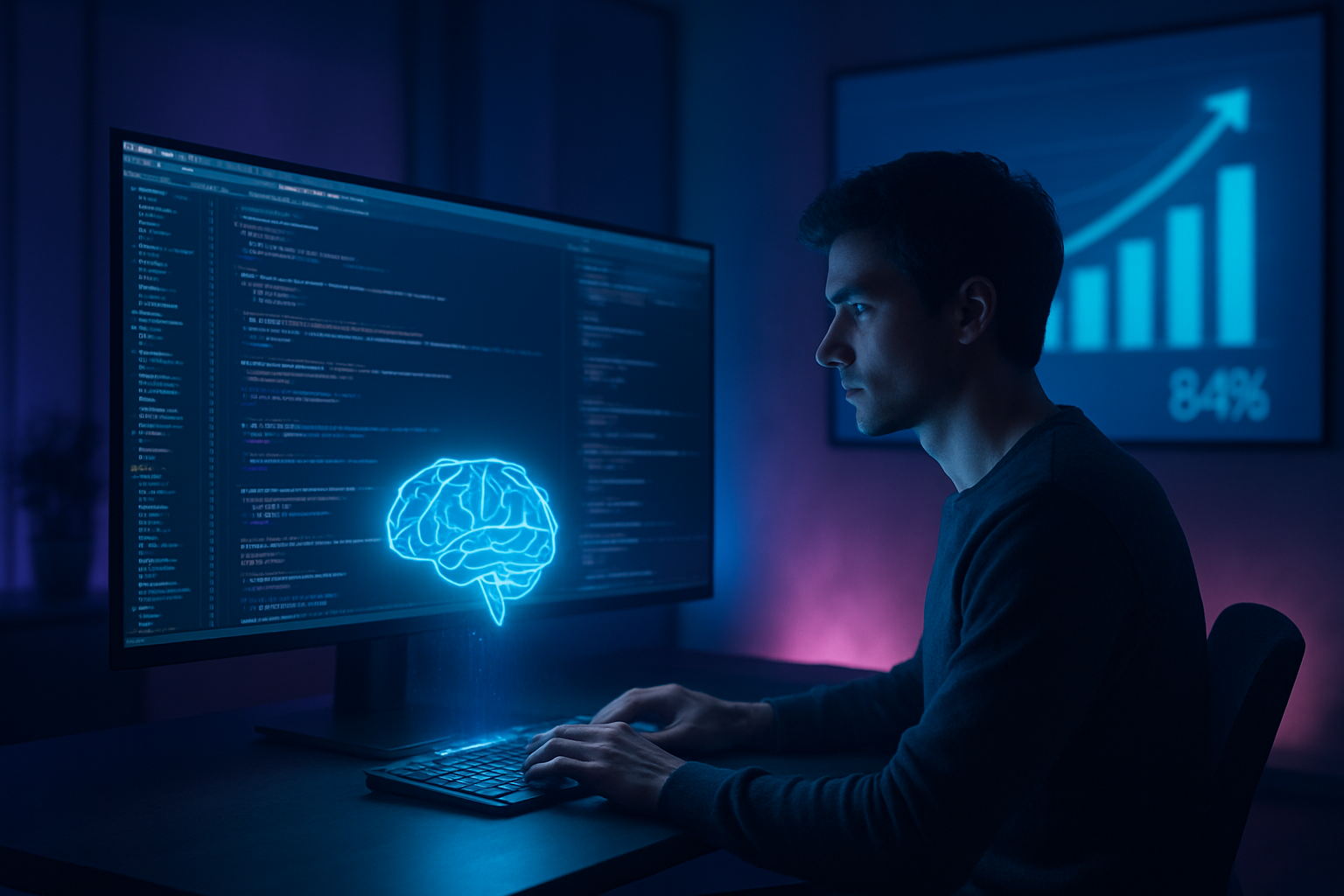
The App Store has witnessed an unprecedented 84% surge in new app submissions, driven by the accessibility of AI-powered coding tools that have revolutionized software development.
Key Points
- App Store sees an 84% surge in new app submissions.
- AI-powered coding tools have significantly lowered barriers for independent developers.
- Apple faces challenges in maintaining quality and security amidst the AI boom.
- The role of the developer is shifting from manual coding to AI orchestration.
- Expect an increase in niche, highly-specialized applications.
In a dramatic shift that is fundamentally reshaping the software development landscape, the Apple App Store has recorded an astounding 84% surge in new app submissions. This massive uptick is not merely a statistical anomaly; it is a direct consequence of the revolution brought about by AI-powered coding tools. These instruments, ranging from advanced code-completion assistants to low-code development platforms, have democratized software creation, placing the power of professional-grade development into the hands of independent creators and hobbyists who previously lacked deep technical expertise. The democratization of software development has shattered traditional barriers to entry. Historically, building a robust iOS application required mastery of Swift, a deep understanding of the Xcode environment, and an intricate knowledge of Apple’s proprietary frameworks. Today, Large Language Models (LLMs) act as tireless co-pilots, handling complex function writing, debugging, and even suggesting sophisticated UI/UX improvements. This acceleration in production velocity is unprecedented in the history of the App Store, marking a pivot point in how digital products are conceived and deployed. However, this rapid expansion is not without its systemic challenges. Apple continues to maintain rigorous standards regarding app quality, security, and data privacy. Reviewers at the App Store have reported a significant increase in submissions that rely heavily on auto-generated code, which occasionally results in software that is bloated, inefficient, or contains unintended security vulnerabilities. Apple is currently navigating a complex technical landscape: they want to encourage the innovation that AI brings, but they cannot afford to compromise the secure, polished user experience that has defined their ecosystem for years. From an analytical perspective, this trend signifies the birth of the 'citizen developer' era. The ability to transform an idea from a rough concept into a functioning, App Store-ready product in a matter of days rather than months means we are entering a period of hyper-specialization. We are likely to see an explosion of niche apps catering to highly specific user needs. Conversely, there is a looming concern that this flood of content could lead to a 'race to the bottom' in terms of originality, as app storefronts become saturated with generic, AI-generated clones that lack true creative vision. What we are witnessing is a fundamental redefinition of what it means to be a developer. The focus is shifting away from the manual, line-by-line coding of the past toward the ability to orchestrate AI models, understand software architecture, and integrate complex technical solutions. Apple, for its part, may soon be forced to refine its App Store guidelines to provide greater clarity on the use of AI in the development lifecycle, particularly regarding intellectual property rights and the provenance of generated code. Ultimately, this 84% surge is a watershed moment for mobile computing. As developers grapple with these new tools and Apple works to balance the tension between quantity and quality, the consumer stands to be the primary beneficiary of this massive influx of digital innovation. The future belongs not necessarily to those who write code the fastest, but to those who can effectively leverage AI to craft unique user experiences that transcend the limitations of automated generation.
The Democratization of Development
AI coding tools have fundamentally transformed programming from an elite skill into an accessible craft. By drastically reducing the time required to write boilerplate code, creators are empowered to focus on solving high-level problems rather than getting bogged down in syntax and technical minutiae. This shift does not signal the obsolescence of the professional developer but rather an evolution in their role. Today's developers are increasingly using AI as a force multiplier, allowing them to execute projects that previously required entire engineering teams, thereby increasing the overall output of the software ecosystem.
Apple's Quality Control in the AI Era
Apple is facing significant pressure to manage the influx of AI-generated content. With the surge in submissions, the company must ensure that the quality and security of the App Store are not compromised by automated tools producing redundant or insecure applications. Maintaining strict privacy and security standards remains Apple's primary hurdle. As a result, many AI-assisted developers are finding that they must still adhere to rigorous manual review processes, forcing them to learn best practices in security and architecture even when leveraging AI-powered development environments.
This article was drafted with AI assistance and editorially reviewed before publication. Sources are listed below.