Blackmagic Design Revolutionizes Photography with the New Photo Page in DaVinci Resolve
Blackmagic Design has announced the all-new Photo page for DaVinci Resolve, bringing Hollywood's most advanced cinematic color grading tools to still photography for the first time, featuring AI-powered enhancements and support for up to 32K resolution.
Key Points
- Introduction of the Photo page, bringing cinematic color tools to still photography.
- Supports processing at source resolution up to 32K (400 megapixels) non-destructively.
- Integrated AI tools including Magic Mask, Relight FX, and Depth Map for advanced retouching.
- Native RAW support for Sony, Canon, Nikon, Fujifilm, and iPhone ProRAW.
- Tethered shooting capabilities for live capture and camera control within the app.
- Available as a free version or a $295 Studio version with no monthly subscription.
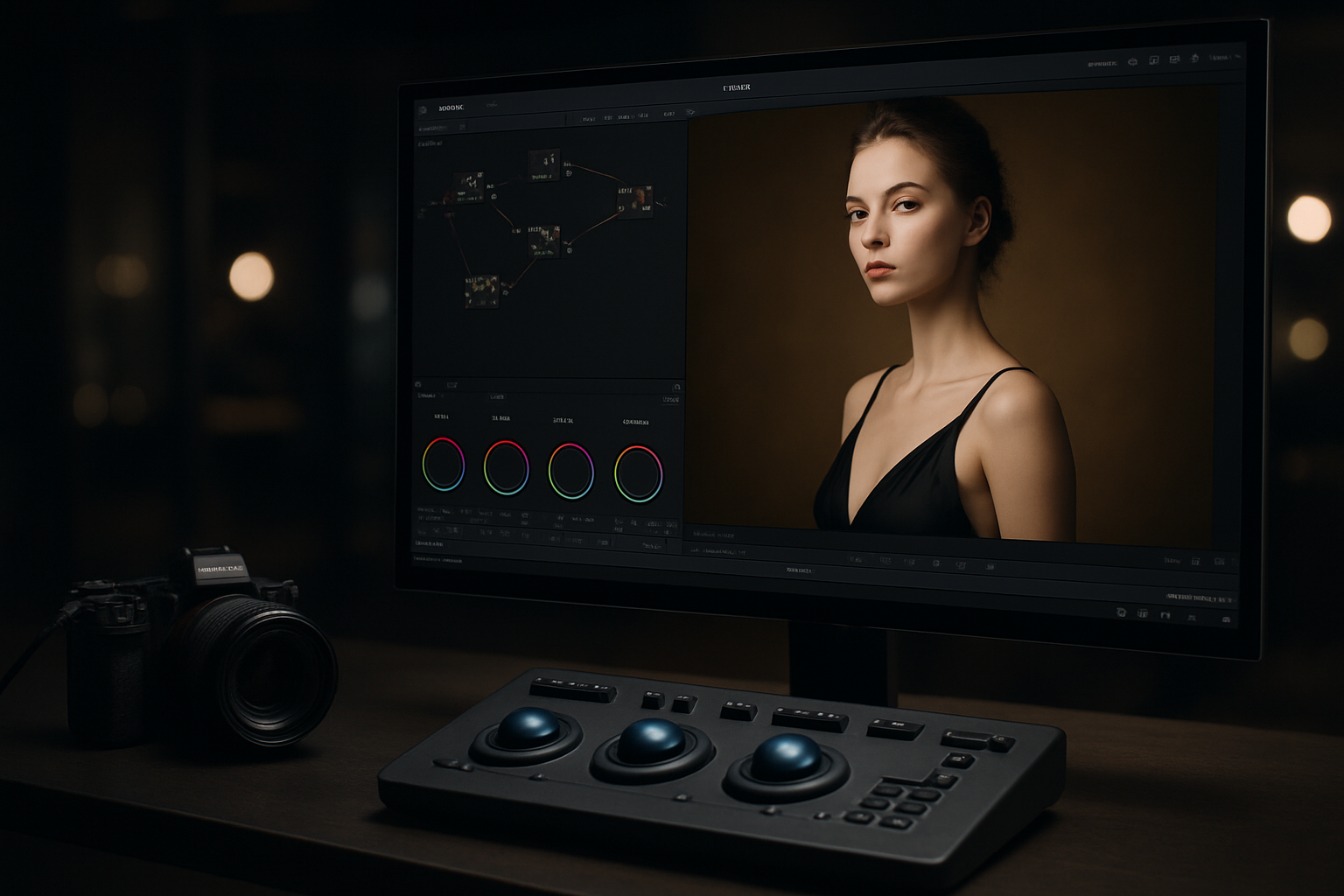
Blackmagic Design has long been the titan of the post-production world, with DaVinci Resolve serving as the industry standard for Hollywood color grading. In a monumental shift, the company has officially introduced the 'Photo' page, a dedicated workspace within DaVinci Resolve 21 that brings cinematic high-end color tools to the world of still photography. This move directly challenges the long-standing dominance of traditional photo editing software by offering photographers the same node-based workflow and advanced color science used on major motion pictures. The core philosophy behind the Photo page is to provide a familiar entry point for photographers while maintaining the immense power of the DaVinci color engine. Users can start with standard adjustments like White Balance, Exposure, and Saturation, but with a single click, they can access the full 'Color' page toolset. Unlike the layer-based systems found in most photo apps, DaVinci Resolve utilizes a Node Editor. This allows for complex, non-destructive grading where each node can represent a specific adjustment—such as a Power Window isolating a subject's eyes or a Qualifier targeting a specific shade of blue in the sky—providing a level of precision that was previously unattainable for still images. On the technical front, the Photo page is built for extreme performance. It supports native RAW files from major brands including Canon, Fujifilm, Nikon, Sony, and even iPhone ProRAW. One of the most impressive specifications is the support for processing at source resolution up to 32K, or over 400 megapixels. This means photographers are never limited by a fixed timeline resolution; they can crop, reframe, and zoom into their original sensor data without losing quality. Leveraging GPU acceleration through Metal (on Mac), CUDA (on NVIDIA), and OpenCL (on AMD/Intel), DaVinci Resolve can process entire albums of high-resolution RAW files significantly faster than conventional photo applications. Artificial Intelligence is at the heart of this new release. The DaVinci Neural Engine powers several groundbreaking features for photographers. 'Magic Mask' allows for the instant selection of subjects or backgrounds without tedious manual masking. 'Depth Map' generates a 3D topographic layout of a scene, enabling users to adjust lighting and color based on the distance from the lens. Furthermore, the 'Relight FX' tool is a game-changer for portrait photography; it analyzes surface geometry to let users add virtual light sources after the photo has been taken, reflecting light naturally across faces and objects to create depth and mood. Collaboration and workflow management have also been prioritized. Through Blackmagic Cloud, photographers can share entire albums and metadata with retouchers and colorists globally in real-time. The software even supports tethered shooting for Sony and Canon cameras, allowing for live capture directly into an album. This enables a workflow where images are graded and organized the moment they are shot. To complement the software, Blackmagic offers hardware panels like the DaVinci Resolve Micro Color Panel for $559, which provides tactile trackballs and knobs for more intuitive and rapid adjustments than a mouse and keyboard could ever offer. DaVinci Resolve remains accessible to all levels of creators. The standard version is available as a free download, providing a robust set of tools for hobbyists. For professionals requiring the full suite of AI tools, advanced noise reduction (UltraNR), and SuperScale upscaling, the DaVinci Resolve Studio version is available for a one-time purchase of $295. By eliminating the subscription model and providing Hollywood-level tools to photographers, Blackmagic Design is not just adding a feature; they are redefining what is possible in the digital darkroom.
The Node-Based Revolution for Stills
The Photo page in DaVinci Resolve transitions photographers from the traditional layer-based system to a professional Node-based workflow. This approach offers unprecedented flexibility in color correction, allowing users to link multiple adjustments, isolate specific elements using Power Windows, and apply complex effects without compromising the original image quality. This system is the secret behind the cinematic look seen in global cinema, and it is now available for processing still photographs with stunning precision. Furthermore, the page provides professional Scopes such as Histogram, Waveform, and Vectorscope, which give photographers a precise technical view of color and light distribution. This ensures absolute accuracy for print or digital publishing. The transition between familiar photography tools and advanced color grading tools is seamless, making DaVinci Resolve a comprehensive workstation for creators who demand the highest quality.
AI-Powered Lighting and Retouching
The Photo page leverages the DaVinci Neural Engine to deliver features that were previously considered impossible. The Relight FX tool, for instance, allows photographers to redistribute light in a scene as if they had physical lighting equipment inside the photo after it was taken. The AI analyzes facial features and object surfaces to ensure light reflects naturally, often eliminating the need for reshoots or complex lighting setups on location. Also notable is the Face Refinement feature, which automatically identifies parts of the face such as eyes, lips, and skin, facilitating automated and rapid digital retouching. Meanwhile, the AI SuperScale tool allows for upscaling low-resolution images up to 4x their original size while maintaining sharp details and removing compression artifacts, making it ideal for restoring old photos or enlarging shots taken on smartphones.
Cloud Collaboration and Hardware Synergy
The update isn't just about software; it extends to collaborative workflows via Blackmagic Cloud. Photographers can now share entire albums with clients or colleagues for immediate review and approval. The software also supports tethered shooting for Sony and Canon cameras, where images appear instantly within the program to be graded and processed in real-time—ideal for high-end fashion and product shoots. To enhance this experience, Blackmagic Design offers hardware control panels like the DaVinci Resolve Micro Color Panel. This panel, specifically designed for grading, features high-quality trackballs that allow simultaneous control over shadows, highlights, and midtones—something that cannot be achieved with the same precision using a mouse and keyboard. This integration between hardware and software places DaVinci Resolve in a unique position as the most powerful integrated system for professional photography today.
This article was drafted with AI assistance and editorially reviewed before publication. Sources are listed below.