
DRAM Price Hikes Are Killing the Hobbyist SBC Market
The hobbyist Single Board Computer (SBC) market is facing an existential crisis as skyrocketing LPDDR DRAM costs force manufacturers to raise prices, making high-end boards unaffordable.
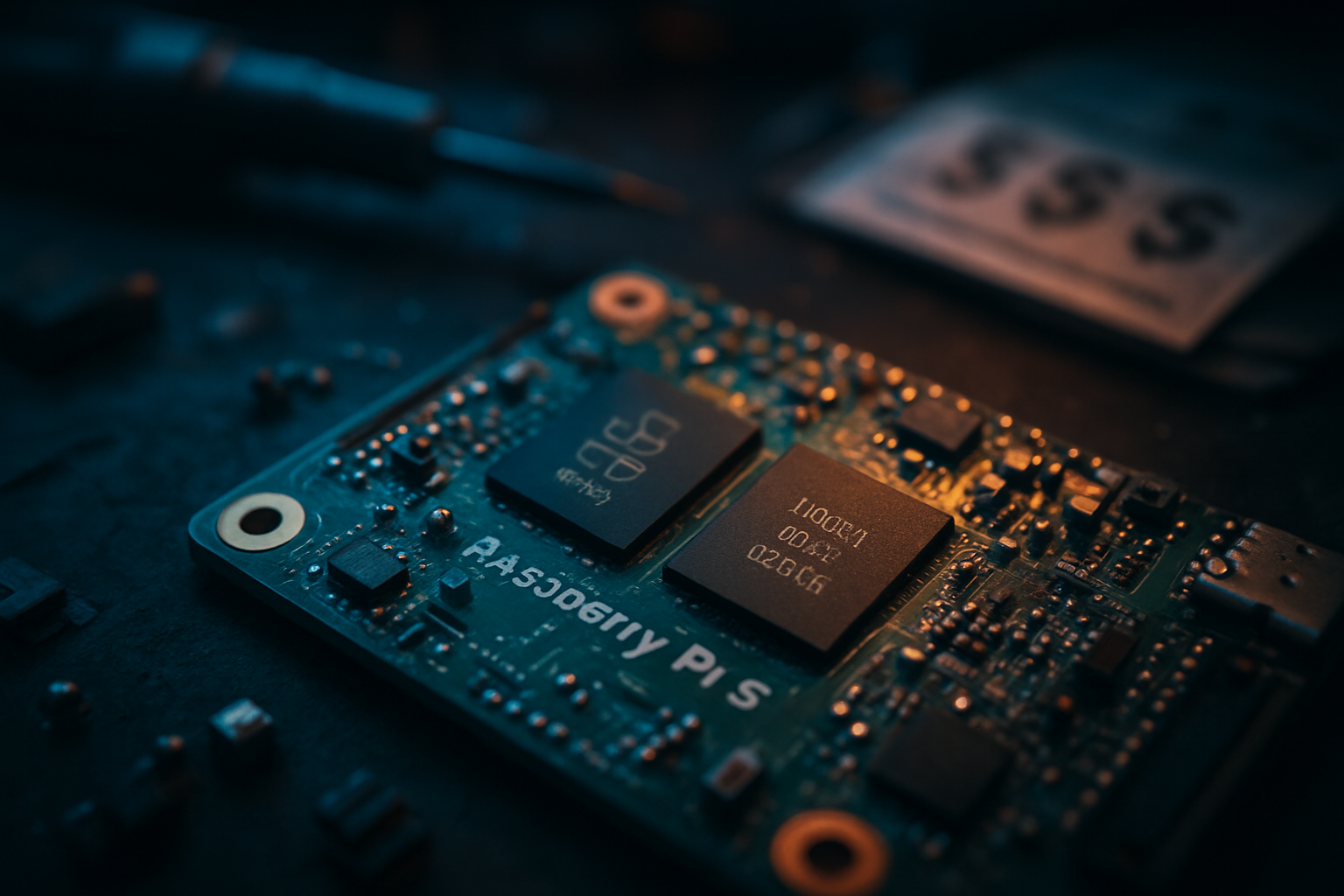
Key Points
- Rising LPDDR DRAM costs are creating an existential crisis for the SBC market.
- Raspberry Pi 5 (16GB) has surged to a price point of $299.99.
- The high cost of memory has led to a major reduction in new product launches.
- Mini PCs and used hardware are also seeing significant price increases.
- Hobbyists are shifting focus toward microcontrollers and legacy hardware to maintain project viability.
In a move that has sent shockwaves through the tech enthusiast community, Raspberry Pi has announced another round of price hikes across its entire lineup of boards featuring LPDDR4 RAM. Alongside this, the company introduced a 'right-sized' 3GB RAM version of the Pi 4, priced at $83.75. This development serves as a stark reminder of the fragile state of the Single Board Computer (SBC) market, which is currently being crushed by the rising costs of DRAM. Perhaps the most jarring piece of news is that the 16GB model of the Raspberry Pi 5 has seen its price climb to a staggering $299.99. Despite the timing of the announcement—coinciding with April 1st—the company has made it clear that this is not a joke. Industry veteran and developer Jeff Geerling, who has extensively covered the high-end SBC market (specifically the 4GB, 8GB, and 16GB variants), warns that unless the DRAM pricing situation undergoes a radical shift, the entire hobbyist SBC market is effectively on life support. According to Geerling, the core issue is that LPDDR chips now represent the majority of the total bill of materials for most board vendors. This has caused a ripple effect, leading to a drastic reduction in the number of new boards hitting the market. While manufacturers like Radxa have managed to maintain some level of cadence in their product releases, most other vendors have been forced to pause development or significantly scale back, unable to justify the manufacturing costs in a market that expects low entry prices. This inflationary trend has also spilled over into the Mini PC market. Devices that were once touted as excellent value for money have seen their price floors rise significantly, with 8GB RAM models now frequently costing upwards of $250. Even the secondary market for used PCs has become increasingly expensive, particularly for units equipped with more than 4GB of RAM, further squeezing the hobbyist demographic that relies on affordable hardware to experiment and build. For many creators, the goal of a project is to keep replication costs below the $100 mark. This is crucial for education and experimentation, as hobbyists are far more likely to push the boundaries of their hardware if they aren't worried about the financial consequences of breaking a $300 board. As these prices continue to climb, the scope of what is possible within the hobbyist space narrows, forcing many to pivot toward older legacy hardware or simpler microcontrollers, which are currently the only affordable avenues remaining. Eben Upton, a key figure at Raspberry Pi, has offered a glimmer of optimism, stating that memory prices are unlikely to remain at these high levels indefinitely and that the current market circumstances, while challenging, will eventually abate. However, the critical question remains: how long can the hobbyist market survive before these prices normalize? There is a legitimate fear that by the time the memory bubble bursts, the vibrant, diverse ecosystem of hobbyist boards may have already withered away. Fortunately, Raspberry Pi possesses a robust industrial base and a thriving microcontroller ecosystem that provides a buffer against these market fluctuations. Smaller vendors, however, lack this diversification and may not be able to weather the storm for much longer. As the industry grapples with these costs, the future of the SBC market remains uncertain, leaving enthusiasts to wait and see if the golden age of accessible computing hardware can be salvaged.
The DRAM Pricing Crisis
LPDDR memory has become the primary cost driver for modern single board computers. As DRAM manufacturers face supply chain and market pressures, the cost of these chips has skyrocketed, forcing SBC manufacturers to pass these expenses on to the consumer. This shift has fundamentally altered the economics of hobbyist hardware. Where once a developer could easily justify purchasing multiple boards for a cluster or a complex project, the high entry price now acts as a significant barrier to entry, stalling innovation across the sector.
Impact on the Hobbyist Landscape
The hobbyist market relies on accessibility. By pricing high-end boards out of reach for the average enthusiast, manufacturers risk isolating their core user base. Many are now retreating to older, cheaper hardware or microcontrollers to keep their projects alive. If this trend continues, the diversity of the SBC ecosystem could suffer irreparable harm. Smaller vendors, unable to compete with the scale of larger corporations, may be forced to exit the market entirely, leaving hobbyists with fewer options and less freedom to experiment.
This article was drafted with AI assistance and editorially reviewed before publication. Sources are listed below.