
Galaxy S26 Ultra Privacy Display Tech Coming to Android Flagships
Samsung is set to revolutionize screen privacy with the Galaxy S26 Ultra, as reports indicate this technology will soon reach other Android flagships.
Key Points
- Galaxy S26 Ultra to debut new Privacy Display technology.
- Feature restricts viewing angles to prevent shoulder-surfing without hurting user experience.
- Hardware-integrated solution superior to traditional screen protectors.
- Leaks confirm rapid adoption by other Android flagships later this year.
- Visual privacy becoming a key differentiator in the premium smartphone market.
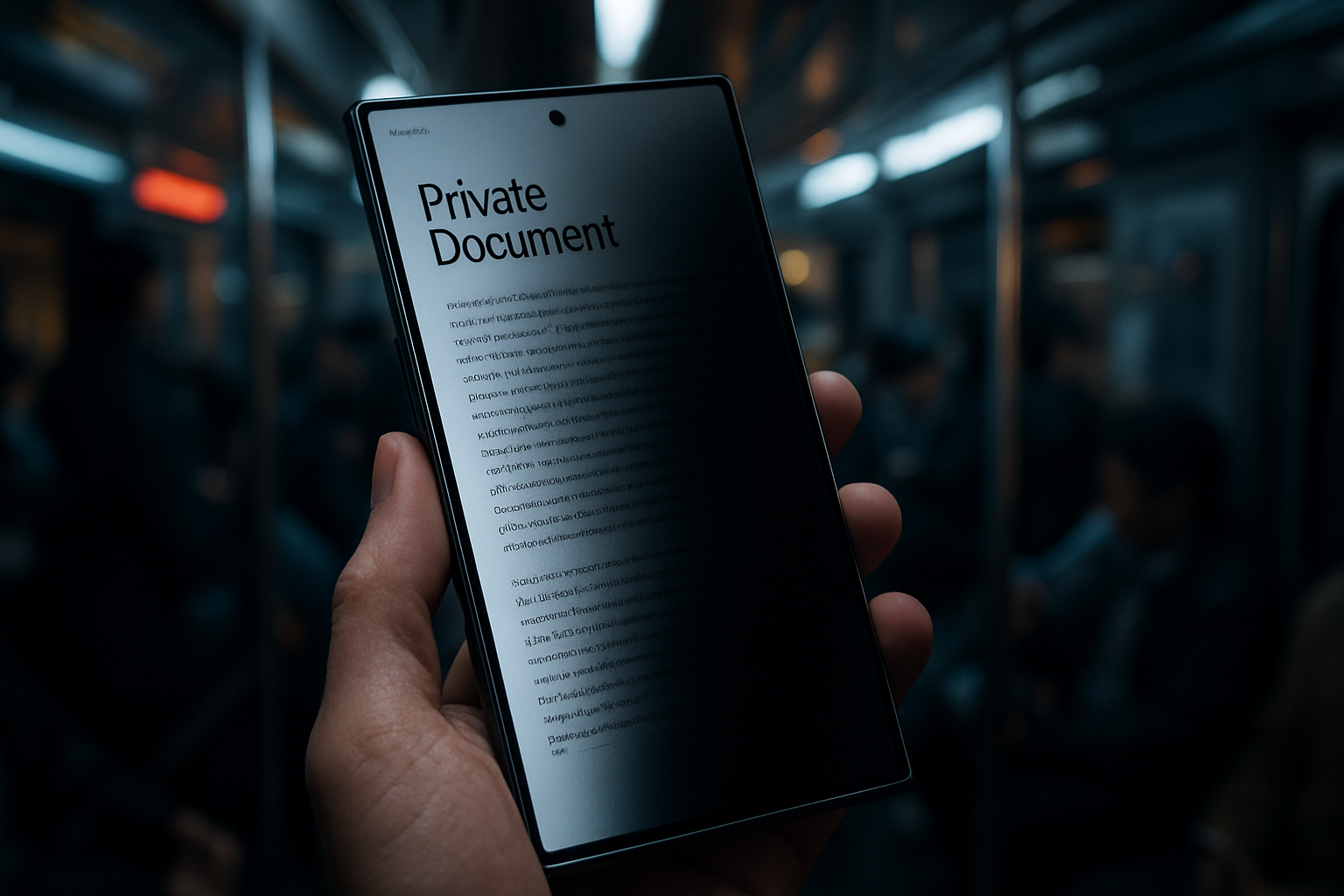
In a significant move to enhance user privacy in public spaces, recent reports confirm that the Samsung Galaxy S26 Ultra will introduce a cutting-edge 'Privacy Display' feature. This is not merely a cosmetic upgrade; it is a major technological leap designed to restrict viewing angles without compromising the visual fidelity for the primary user. Visual privacy has long been a concern for smartphone users in crowded environments, and Samsung’s latest innovation sets a new industry benchmark for security-conscious hardware. The Privacy Display technology utilizes advanced light-path manipulation within the screen layers to control the direction of light emitted by the pixels. Unlike traditional privacy screen protectors that often dim the display and reduce clarity, Samsung’s integrated solution is baked into the hardware stack. This ensures that the user experiences a crisp, vibrant display when looking at the device head-on, while onlookers from the side see a darkened or obscured screen. This represents an elegant and highly effective solution for visual data security. Beyond the Galaxy S26 Ultra, industry leaks suggest that this technology will rapidly propagate to other Android flagships before the end of the year. This accelerated adoption rate highlights the competitive drive among manufacturers to meet the growing consumer demand for personalized security features. We expect to see this display technology integrated into high-end offerings from major competitors, fundamentally shifting the landscape of the 2026 smartphone market. This initiative comes at a critical time when personal data protection is more paramount than ever. Users frequently access sensitive banking applications or private communications in public, and the Privacy Display provides a physical layer of security that cannot be bypassed via software exploits. By relying on the physics of light, this feature provides a robust defense against shoulder-surfing in open office environments, coffee shops, and public transportation. Historically, third-party privacy filters were the only solution, but they often suffered from touch-sensitivity issues, dust accumulation, and color distortion. By embedding this capability directly into advanced OLED panels, Samsung preserves color accuracy and responsive touch performance. This innovation reaffirms Samsung’s position as an industry leader and forces competitors to innovate or risk being left behind in the premium smartphone segment. The implications for the smartphone market are profound. As smartphones become the primary tool for professional and sensitive tasks, features like the Privacy Display will likely become standard requirements for flagship devices. Consumers will no longer be satisfied with just raw processor power or high-megapixel camera counts; they will prioritize devices that offer comprehensive protection for their visual data. This trend will inevitably push software developers to optimize their interfaces to work seamlessly with these new, privacy-oriented displays. In conclusion, 2026 marks a pivotal turning point in smartphone evolution. With the adoption of Privacy Display technology, we are entering an era where privacy extends beyond password protection and software encryption into the physical space surrounding the user. Samsung is once again leading the charge, and it will be fascinating to observe how the wider Android ecosystem responds to this challenge in the coming months.
A Revolution in Display Privacy
The Privacy Display technology in the Galaxy S26 Ultra represents a massive shift in how users secure their data in public spaces. By precisely controlling light emission from the OLED pixels, Samsung ensures that the screen remains legible only to the person directly in front of it. This innovation eliminates the need for bulky, low-quality external privacy filters that often degraded touch sensitivity and color accuracy, providing a seamless and secure user experience.
Widespread Adoption Across Android
This feature is not exclusive to Samsung; reports indicate that other major Android manufacturers are actively preparing to integrate this display technology into their flagship devices later this year. This industry-wide shift underscores the growing importance of privacy in the modern era, likely establishing Privacy Display as a standard requirement for premium smartphones moving forward.
This article was drafted with AI assistance and editorially reviewed before publication. Sources are listed below.