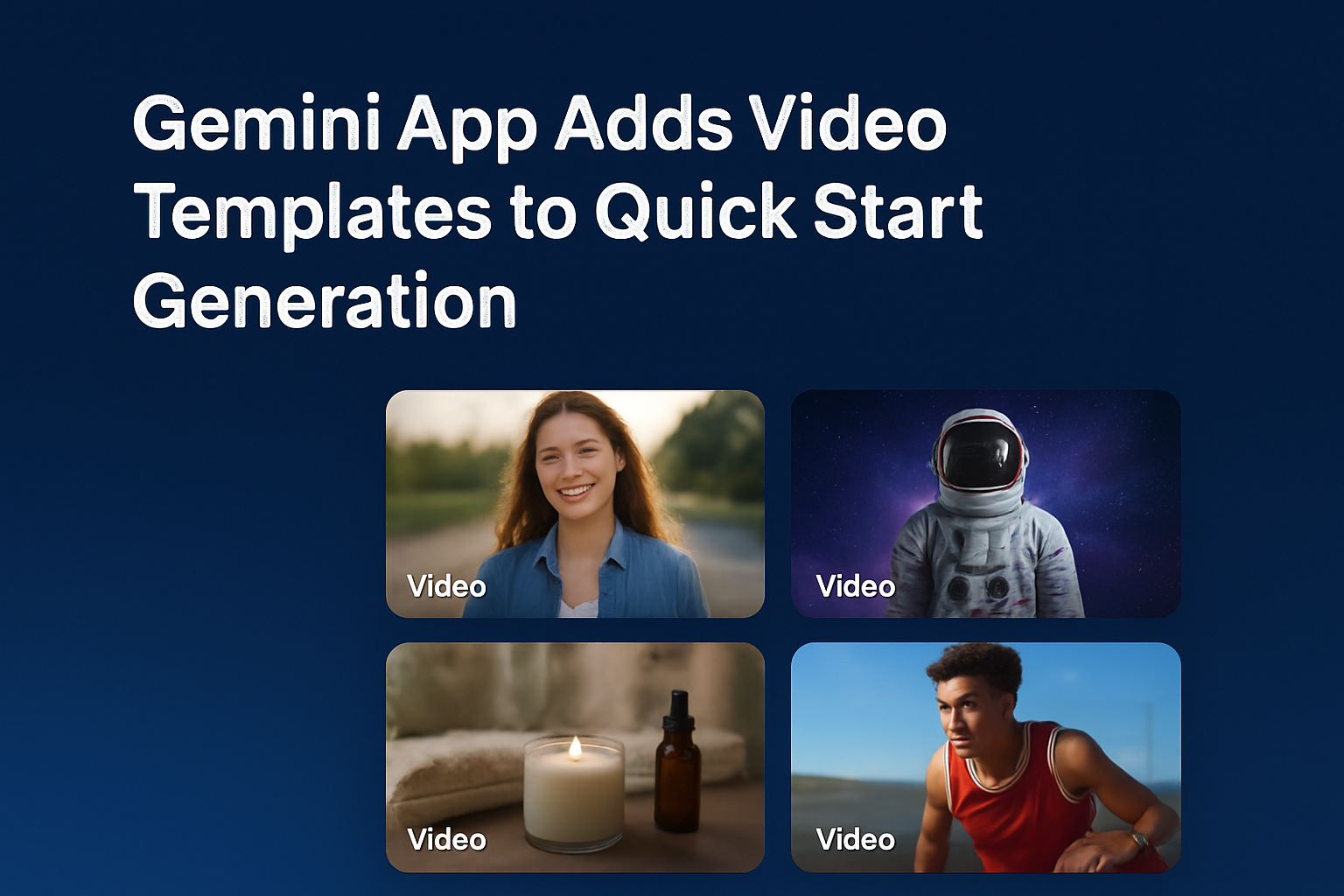
Gemini App Adds Video Templates to Quick Start Generation
Google's Gemini app is evolving into a comprehensive creative suite with the introduction of new video generation templates, following its recent expansion into music creation.
Key Points
- Introduction of video generation templates to simplify visual content creation.
- Gemini evolves into a multimedia creative suite following music generation updates.
- Significant reduction in manual editing time for professional and casual creators.
- Strategic move to outpace competitors in the generative AI market.
- Focus on accessibility and integration within the Google ecosystem.
In a strategic move to bolster the creative capabilities of its AI ecosystem, Google has officially introduced video generation templates to the Gemini app. This update, following closely on the heels of the platform's recent integration of music generation tools, marks a significant shift in Gemini's identity—from a text-based assistant to a comprehensive multimedia creative suite. By offering pre-designed templates, Google is effectively lowering the barrier to entry for high-quality video production, allowing users to transform simple text prompts into polished visual narratives with unprecedented speed. The core utility of these new templates lies in their ability to handle the heavy lifting of video editing. Previously, generating a video from AI required users to navigate complex parameter settings and often resulted in inconsistent visual styles. With the new template-driven approach, Gemini provides a structured framework where users can select a specific aesthetic or format, input their thematic requirements, and let the model handle the sequencing, transitions, and visual coherence. This is a direct response to the growing demand for 'instant' content creation tools that cater to the fast-paced nature of modern social media and professional marketing workflows. From a technical perspective, integrating templates into a generative AI model involves sophisticated orchestration of visual data. Gemini must not only understand the semantic intent of the user's prompt but also map that intent onto a pre-defined structural logic. This ensures that the generated output adheres to the pacing, framing, and stylistic constraints defined by the chosen template. For the end-user, this translates into a seamless experience where the AI acts as a director and editor, significantly reducing the 'blank canvas' anxiety that often accompanies creative projects. Looking at the broader context of the AI industry, this update positions Google as a formidable competitor in the generative video space. While rivals like OpenAI have made headlines with high-fidelity video generation models, Google’s strategy focuses on accessibility and integration. By embedding these tools directly into the Gemini app, Google is leveraging its massive user base to normalize the use of AI in daily creative tasks. This is a calculated play to keep users within the Google ecosystem, making it difficult for competing services to gain a foothold when the tools are already available within the apps users frequent daily. For the average consumer, this means that professional-grade video creation is no longer siloed behind expensive software like Adobe Premiere or DaVinci Resolve. Whether it is a small business owner looking to create a quick promotional clip for a product launch or a student needing to illustrate a presentation, the accessibility of Gemini’s templates democratizes visual storytelling. However, this ease of use also brings up important considerations regarding the saturation of AI-generated content and the need for better disclosure mechanisms, which remains a key area of focus for tech regulators and developers alike. As we look toward the future of the Gemini platform, it is clear that Google is building a unified creative workflow. The ability to generate text, code, music, and now video from a single interface is a powerful value proposition. The next logical step, and one that many experts are anticipating, is a tighter integration with Google's existing suite of productivity tools. Imagine generating a video template directly from a Google Slides presentation or a document in Google Docs—the potential for increased productivity is immense. In conclusion, the addition of video templates to the Gemini app is a testament to the rapid evolution of generative AI. It is no longer about what these models can do; it is about how they can be integrated into the tools we use to work and express ourselves. As Google continues to iterate on these features, the gap between human intent and machine-generated content will continue to narrow. For creators, this is an exciting time, provided they can master the art of prompting to leverage these powerful new tools effectively.
Revolutionizing Content Creation
The integration of video templates into Gemini represents a paradigm shift in user-AI interaction. By providing a structured foundation, these templates ensure visual consistency and professional quality, drastically reducing the time required to move from an idea to a finished video. This evolution cements Gemini’s status as an essential tool for creators, bridging the gap between complex creative software and user-friendly generative interfaces, effectively streamlining the entire production workflow.
Competitive Landscape
This update arrives amidst intense competition in the generative AI sector. By rapidly deploying music and video generation features, Google is aiming to establish an all-encompassing creative ecosystem that reduces the need for third-party tools. The strategic focus is on building a comprehensive 'one-stop shop' for digital creativity. This level of integration not only enhances user retention but also adds significant value to Google’s premium service tiers, making them more attractive to professional creators and businesses.
This article was drafted with AI assistance and editorially reviewed before publication. Sources are listed below.