
How to Use New ChatGPT App Integrations: Spotify, DoorDash, and Uber
Explore how ChatGPT is changing the game by linking your accounts directly to apps like Spotify and Uber, allowing you to execute daily tasks through simple prompts.
Key Points
- Direct integration of Spotify, DoorDash, Uber, and Expedia accounts with ChatGPT.
- Simplified task execution via natural language prompts, eliminating the need for app-switching.
- Built-in guided setup flow for linking and authenticating third-party accounts.
- Expanding the role of AI from text generation to active productivity and task management.
- Robust security protocols ensuring user control over data permissions and access.
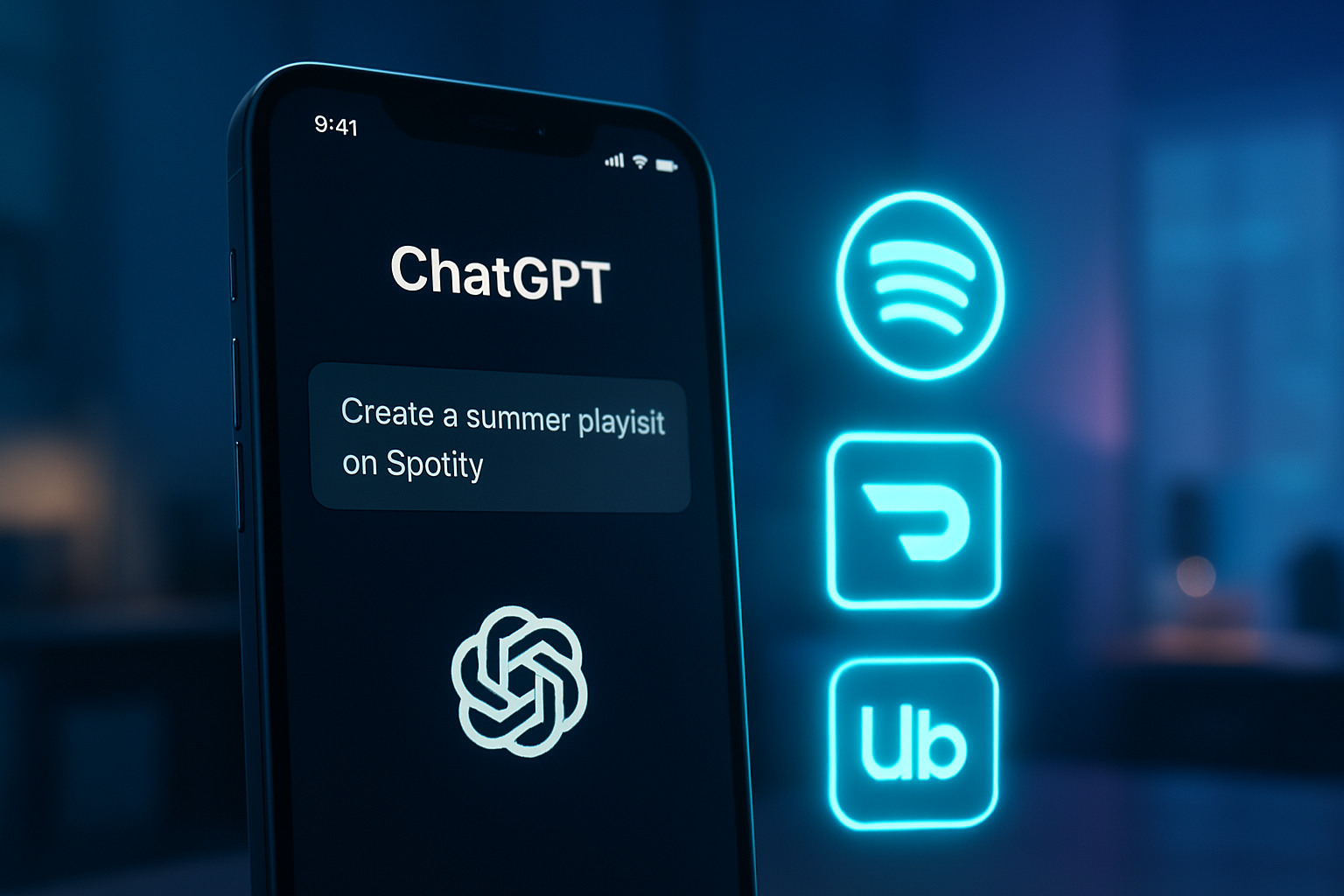
The landscape of artificial intelligence is shifting rapidly, moving from simple chatbot interfaces toward functional, agent-based systems that can perform real-world tasks. OpenAI’s recent rollout of app integrations for ChatGPT marks a significant milestone in this evolution. By allowing users to link their accounts directly to platforms like Spotify, DoorDash, Uber, Expedia, and more, the company is transforming ChatGPT from a passive text generator into an active digital assistant capable of executing complex workflows. This integration model is built on the premise of a centralized digital hub. Users no longer need to navigate between disparate applications to manage their digital lives. For instance, the Spotify integration is particularly compelling; instead of manually curating playlists, a user can simply instruct ChatGPT to generate a playlist based on a specific mood or event. The AI then handles the heavy lifting, creating the playlist and syncing it directly to the user’s Spotify library. This seamless synchronization is the hallmark of the new integration suite. Getting started with these integrations is designed to be intuitive and user-friendly. After logging into the ChatGPT platform, the user simply needs to invoke the desired app by name at the beginning of their prompt. For example, typing "Use Spotify to..." or "Order from DoorDash" triggers the initiation process. ChatGPT then guides the user through a secure authentication workflow, where they can grant the necessary permissions to link their third-party accounts. Once linked, these services become part of the assistant's toolkit, accessible through natural language commands. Beyond simple conveniences, these integrations represent a strategic shift in how software interacts with users. By embedding services like Canva for design, Figma for collaborative work, and Expedia for travel logistics, OpenAI is effectively turning ChatGPT into a comprehensive productivity suite. For professionals, this means the ability to bridge the gap between creative conceptualization and execution. A designer could theoretically ask ChatGPT to help draft a layout concept and then use the Canva integration to begin the design process, significantly streamlining the workflow. For the average consumer, the benefits are equally profound. The "app fatigue" phenomenon—where users are overwhelmed by the sheer number of apps they must manage—is directly addressed by this centralized approach. Imagine planning a trip: you can ask ChatGPT to search for flights and hotels via Expedia, organize your itinerary, and perhaps even set up a ride-share request through Uber for your arrival, all within a single conversation thread. This level of orchestration was previously impossible without manual intervention across multiple platforms. Security and privacy remain at the forefront of these implementations. OpenAI employs robust OAuth protocols to ensure that ChatGPT only accesses the specific data and functions necessary for the requested tasks. Users retain full control over their account permissions, allowing them to revoke access to any integrated app at any time. This balance of functionality and security is critical as users begin to entrust more of their digital tasks to AI agents. Looking toward the future, the integration ecosystem is poised for massive expansion. As more developers leverage OpenAI’s API, we can expect to see deeper integrations with banking, email management, and even smart home IoT devices. We are entering the era of "Agentic AI," where the assistant doesn't just provide information but actively performs actions on the user's behalf. This transition will likely redefine how we perceive software interfaces in the coming years. In conclusion, OpenAI’s move to integrate ChatGPT with major third-party apps is a forward-thinking strategy that aligns with the needs of modern digital users. By acting as a central command station, ChatGPT is not just saving time but is fundamentally changing the relationship between humans and their digital tools. Whether you are a casual user looking to spice up your music library or a power user seeking to automate complex professional tasks, these integrations offer a glimpse into a future where AI handles the administrative burden of our daily lives.
How the New Integrations Work
The new integration feature in ChatGPT leverages direct API connections to allow the AI assistant to perform specific actions within third-party applications. By authenticating through the ChatGPT interface, users grant the AI permission to execute tasks such as ordering food, curating playlists, or managing travel bookings, effectively turning ChatGPT into a centralized control hub. This technology does not imply full access to a user's device, but rather a secure, task-specific bridge. When a user issues a command, the system analyzes the intent and transmits the appropriate instructions to the target app, creating a fluid and interactive user experience that goes far beyond traditional text-based responses.
Productivity and Future Potential
These integrations extend beyond entertainment to include professional-grade tools like Canva, Figma, and Expedia. This allows users to initiate creative projects or coordinate complex travel logistics within a single interface, significantly reducing the cognitive load associated with switching between multiple platforms. This move is part of OpenAI’s broader strategy to evolve ChatGPT into a sophisticated 'Agentic' assistant. By bridging the gap between various digital tools, the AI shifts from a simple information processor to an executive assistant capable of real-world task completion, setting a new standard for digital productivity.
This article was drafted with AI assistance and editorially reviewed before publication. Sources are listed below.