
Tech Adventure: Installing Windows 3.1X on a Modern Ryzen 9 9900X PC
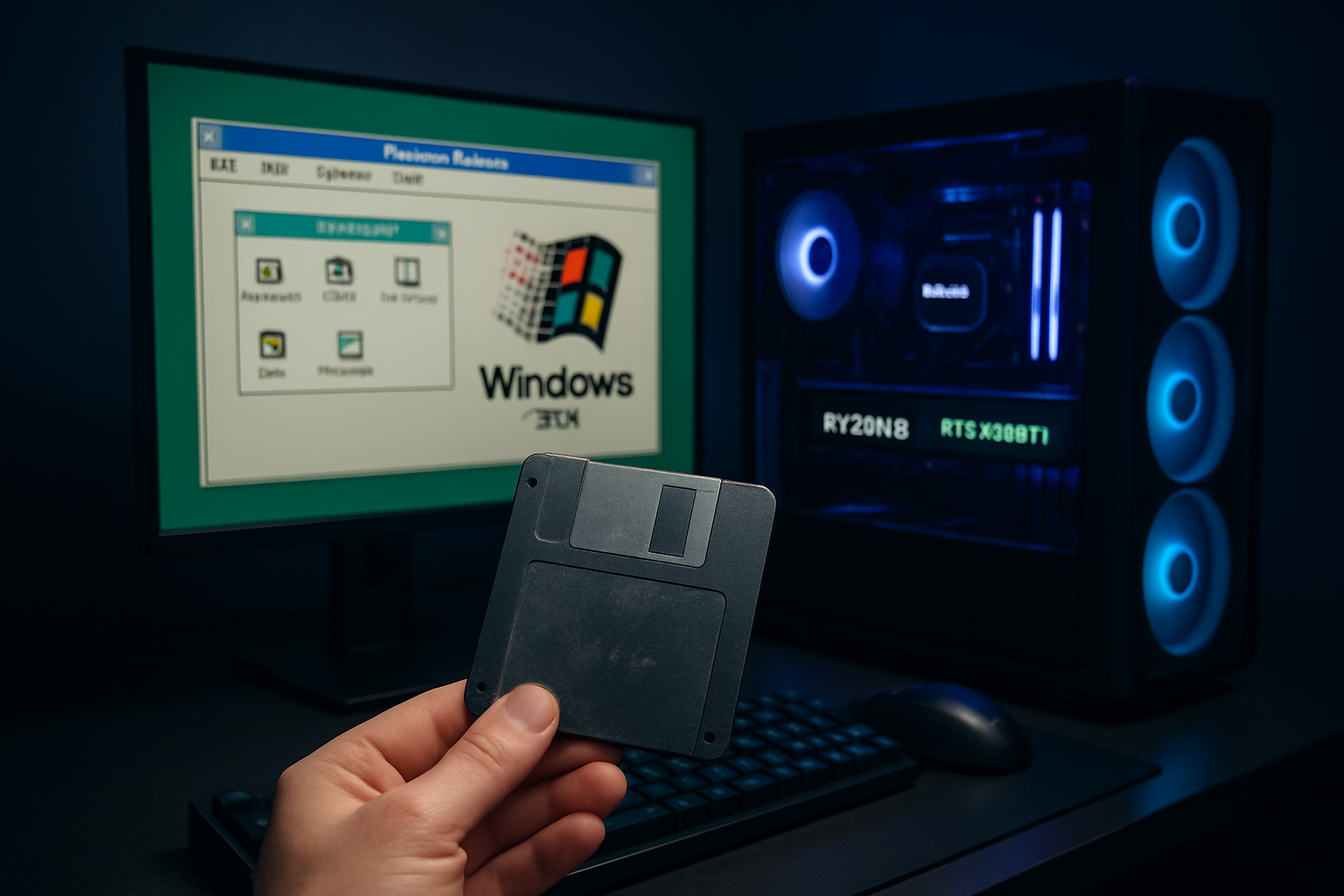
A retro computing enthusiast has achieved a technical feat by installing the 1992-era Windows 3.1X OS on a modern PC powered by a Ryzen 9 9900X and an RTX 5060 Ti.
Key Points
- Installed 1992's Windows 3.1X on a modern Ryzen 9 9900X system.
- Leveraged ASUS motherboard's classic BIOS and CSM for compatibility.
- Resolved OS crashes by switching from Enhanced Mode to Standard Mode.
- Utilized VBESVGA drivers to achieve 1080p resolution on modern hardware.
- Integrated an Ensoniq ES1370 sound card for native audio and MIDI support.
In the fast-paced world of modern technology, where manufacturers compete to release the most powerful processors and the fastest graphics cards, a tech enthusiast known as Omores has decided to challenge time itself. The content creator successfully installed the legacy operating system Microsoft Windows 3.1X, which launched in 1992, directly onto a modern PC featuring cutting-edge hardware from 2024 and 2025. The platform used for this project is a powerhouse, featuring an AMD Ryzen 9 9900X processor based on the Zen 5 architecture, paired with an NVIDIA GeForce RTX 5060 Ti graphics card based on the Blackwell architecture. Combining an operating system over three decades old with such modern hardware raises significant questions about backward compatibility. However, Omores proved that a 30-year technological gap doesn't necessarily prevent legacy software from running on contemporary systems. The process began with a set of original 3.5-inch floppy disks containing a backup of Windows 3.1X. A critical component of this setup was the ASUS motherboard, which features classic BIOS functionality. Enabling the Compatibility Support Module (CSM) was instrumental, allowing the system to handle the boot environment required for such an ancient OS. Before the main installation, the enthusiast prepared the system using a Windows 95 boot floppy to create the necessary FAT16 partition for DOS. Installing the OS from a USB-attached floppy drive went surprisingly smooth. Despite the age of the media, there was no sign of bit rot or data corruption, and the installer recognized the drive as Drive A: without issue. The first major hurdle appeared immediately after the transition from the DOS prompt to the Windows 3.1X GUI, where the system crashed. This was due to a conflict between the OS's Enhanced Mode and the modern hardware. The fix was surprisingly simple: switching to Standard Mode, which was originally intended for pre-i386 systems, provided the necessary compatibility to get the OS running. Once the system was up and running, the interface was initially limited to a low resolution. To solve this, Omores utilized the VBESVGA graphics driver developed by PluMGMK and hosted on GitHub. This driver proved to be a game-changer, scaling the UI to the display’s native 1920 x 1080 resolution and allowing the RTX 5060 Ti to function without glitches. While the driver is still in beta, it has seen 44 releases and has matured significantly, handling modern Nvidia cards far better than in previous iterations. With the display issues resolved, the focus shifted to enabling Enhanced Mode to take advantage of virtual memory and improved multitasking. Furthermore, the user wanted to enable sound, which required the Enhanced Mode to be active. By installing the AHCIFIX.386 patch and modifying the System.ini file, the system was successfully configured for Enhanced Mode. For audio, Omores used an Ensoniq ES1370 PCI sound card, which is one of the few cards known to work on modern hardware with original drivers and full MIDI support. This project serves as a fascinating case study in software flexibility and hardware versatility. It shows that even with the immense architectural shifts in computing over the last 30 years, there is still room for retro enthusiasts to breathe new life into legacy systems. For those interested in replicating this experiment, Omores has provided a link to a Windows 3.1 update script in his video description, which helps users transition from floppy disks to a fully functional, bare-metal modern retro system.
Overcoming Compatibility Hurdles
The user faced significant compatibility challenges between a 16-bit OS and the modern Ryzen 9 9900X architecture. The solution lay in mastering the motherboard's BIOS settings, particularly enabling the Compatibility Support Module (CSM) to bridge the gap between modern firmware and legacy requirements. Once the system booted, stability became the priority. The conflict between the OS's Enhanced Mode and the modern CPU caused immediate crashes. By switching to Standard Mode, the enthusiast was able to stabilize the environment, proving that even the most advanced hardware can host legacy software with the right configuration.
Community-Driven Solutions
Independent developers played a crucial role in this project's success. Open-source drivers like VBESVGA allowed the user to scale the Windows 3.1X UI to a modern Full HD resolution, transforming the user experience significantly. Beyond graphics, the project required specific patches for sound and multitasking. Utilizing community-developed fixes like AHCIFIX.386 and specific legacy hardware like the Ensoniq ES1370 card demonstrated that with the right community patches, ancient operating systems can remain functional on the latest computing platforms.
This article was drafted with AI assistance and editorially reviewed before publication. Sources are listed below.