
Samsung Galaxy S26 Ultra Review: Has the King Found Its Spark?
The Samsung Galaxy S26 Ultra returns to set new standards for flagship smartphones with design refinements and privacy tech, but does it justify the $1,299 price tag?
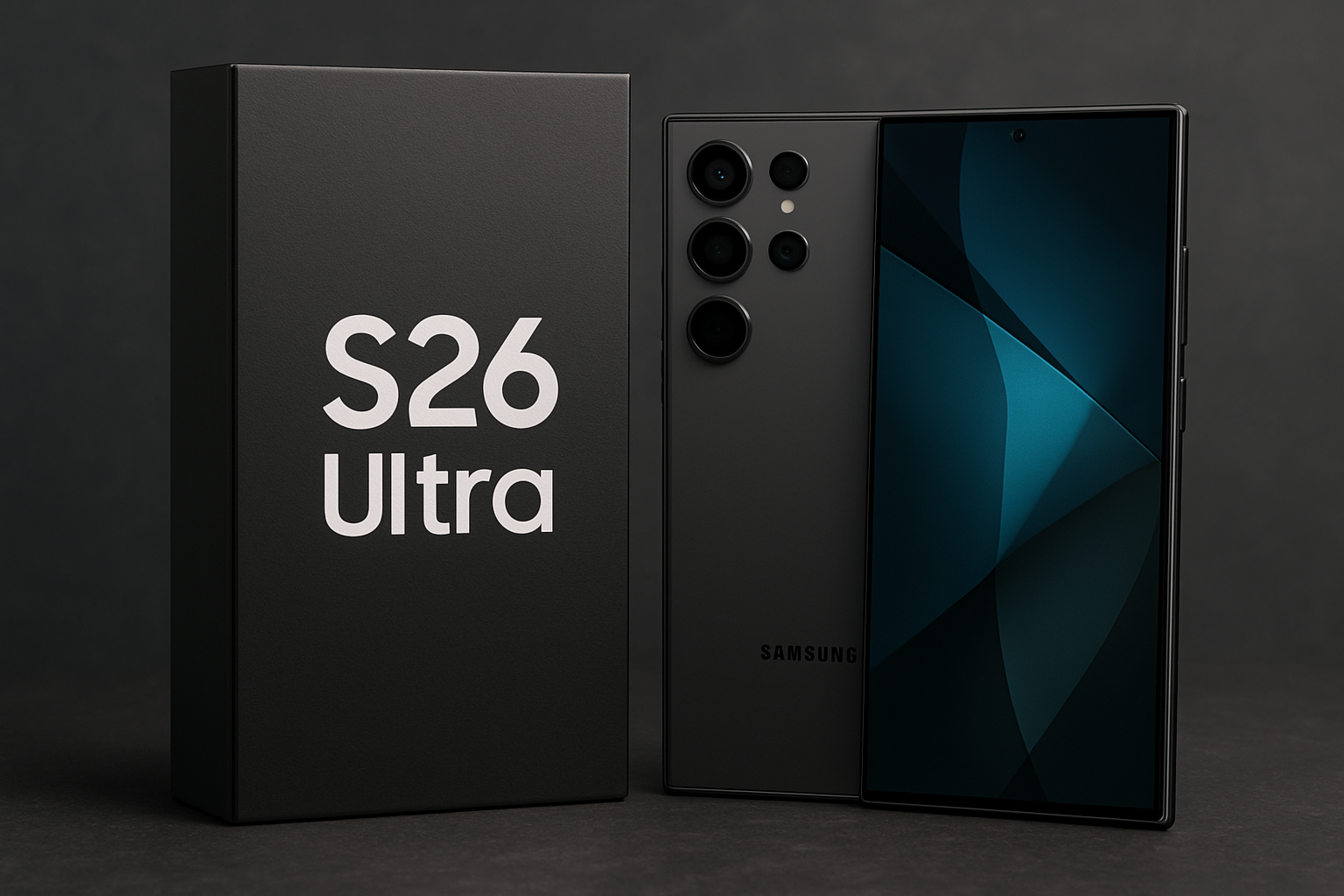
Key Points
- Snapdragon 8 Elite Gen 5 chipset delivers class-leading benchmark performance.
- Refined design with a new camera bump adds much-needed personality.
- Innovative Privacy Display offers hardware-level protection for sensitive data.
- Wired charging speed upgraded to 60W, outperforming previous 45W limits.
- Large physical dimensions make one-handed operation difficult for most users.
The Samsung Galaxy S26 Ultra arrives at a critical moment for the Android ecosystem, aiming to reclaim the 'special' status that its predecessor seemingly lost. Priced at $1,299.99, this flagship is not just an iteration; it is a statement of intent. Powered by the overclocked Snapdragon 8 Elite Gen 5 for Galaxy chipset and featuring a refined design language, the S26 Ultra is clearly targeting power users and hardware enthusiasts who demand the absolute best from their mobile devices. Design-wise, the most immediate change is the reintroduction of a distinct camera bump. After the flat, slab-like appearance of the S25 Ultra, the S26 Ultra feels like a breath of fresh air. It breaks up the monotony of the rear glass and gives the phone a more premium, industrial aesthetic. However, size remains a significant factor. Measuring 163.3mm tall and 78.1mm wide, this is a massive device. It is a two-handed phone by design, and users accustomed to smaller form factors may find the ergonomics challenging, even with the switch to Armor Aluminum 2, which provides a sturdy, premium feel in the hand. One of the most touted features is the new 'Privacy Display.' This exclusive hardware feature uses narrow pixels to restrict viewing angles, ensuring that sensitive data—like banking info or private notifications—remains visible only to the person directly in front of the screen. While it is a clever technical achievement, its real-world utility is subjective. During testing, it proved effective at obscuring content from prying eyes, but it remains a niche feature that the average user might rarely trigger. Performance is where the S26 Ultra truly shines. Benchmarks confirm that the Snapdragon 8 Elite Gen 5 is a powerhouse. In Geekbench 6, the device goes toe-to-toe with the iPhone 17 Pro and consistently outperforms the OnePlus 15 in sustained graphical workloads. During the intense Wild Life Extreme stress test, the S26 Ultra maintained a level of consistency that its predecessors lacked, showing that Samsung has finally mastered the thermal management of its top-tier silicon. Battery life and charging have also seen a much-needed boost. The move to 60W wired charging is a welcome upgrade, cutting down total charge time significantly compared to the 45W limit of previous years. While the 5,000mAh battery is reliable, it is not class-leading. In head-to-head tests, it falls slightly behind competitors utilizing newer silicon-carbon battery technology. It is a 'good' battery rather than a 'great' one, which might be a point of contention for power users who push their devices to the limit daily. Then there is the S Pen. Samsung has kept the stylus, though it has been moved slightly closer to the frame edge, requiring a specific orientation for insertion. It lacks Bluetooth connectivity and any major new features, leading to the ongoing debate: is it time to retire the S Pen in favor of internal space for larger batteries or integrated Qi2.2 magnetic charging? Currently, the S Pen remains a polarizing inclusion for a flagship that is increasingly trying to prioritize modern hardware trends. Ultimately, the Galaxy S26 Ultra is a refined, powerful, and undeniably premium device. It fixes many of the design complaints of the previous generation and delivers top-tier performance that justifies its existence in a crowded market. Whether or not it is 'special' enough depends on the user's priorities. If you want the most versatile, powerful, and durable Android phone on the market, the S26 Ultra is the clear winner, despite its minor quirks and massive footprint.
Design and Performance Evolution
The Galaxy S26 Ultra marks a significant shift in aesthetic strategy. By reintroducing a distinct camera bump, Samsung has successfully mitigated the 'boring' design complaints directed at the S25 Ultra. The use of Armor Aluminum 2 ensures that the device remains durable while feeling premium, although its sheer size makes it a device that almost exclusively requires two-handed operation. Under the hood, the performance is nothing short of exceptional. The Snapdragon 8 Elite Gen 5 ensures that the S26 Ultra remains a benchmark leader. Whether handling intensive multi-tasking or high-end graphical rendering, the device maintains its poise, solidifying its position as the go-to choice for power users who demand consistency and speed.
Charging and Privacy Innovation
Samsung has finally addressed the long-standing 45W charging bottleneck by bumping the wired charging speed to 60W. This change significantly improves the daily experience for heavy users. While Qi2.2 wireless charging is supported, the lack of an integrated magnetic ring remains a slight drawback for those heavily invested in the magnetic accessory ecosystem. The Privacy Display is an ambitious feature that demonstrates Samsung's willingness to experiment with hardware-level security. By restricting viewing angles, it provides a unique layer of privacy. However, its necessity remains a point of debate, as many users may find it to be a secondary feature compared to the more critical need for larger battery capacity and better ergonomics.
This article was drafted with AI assistance and editorially reviewed before publication. Sources are listed below.