
Sony Teases True RGB Mini LED Tech: A New Standard for Displays
Sony has unveiled its new True RGB technology for Mini LED TVs, promising the highest color volume and brightness in its history by leveraging professional-grade processing.
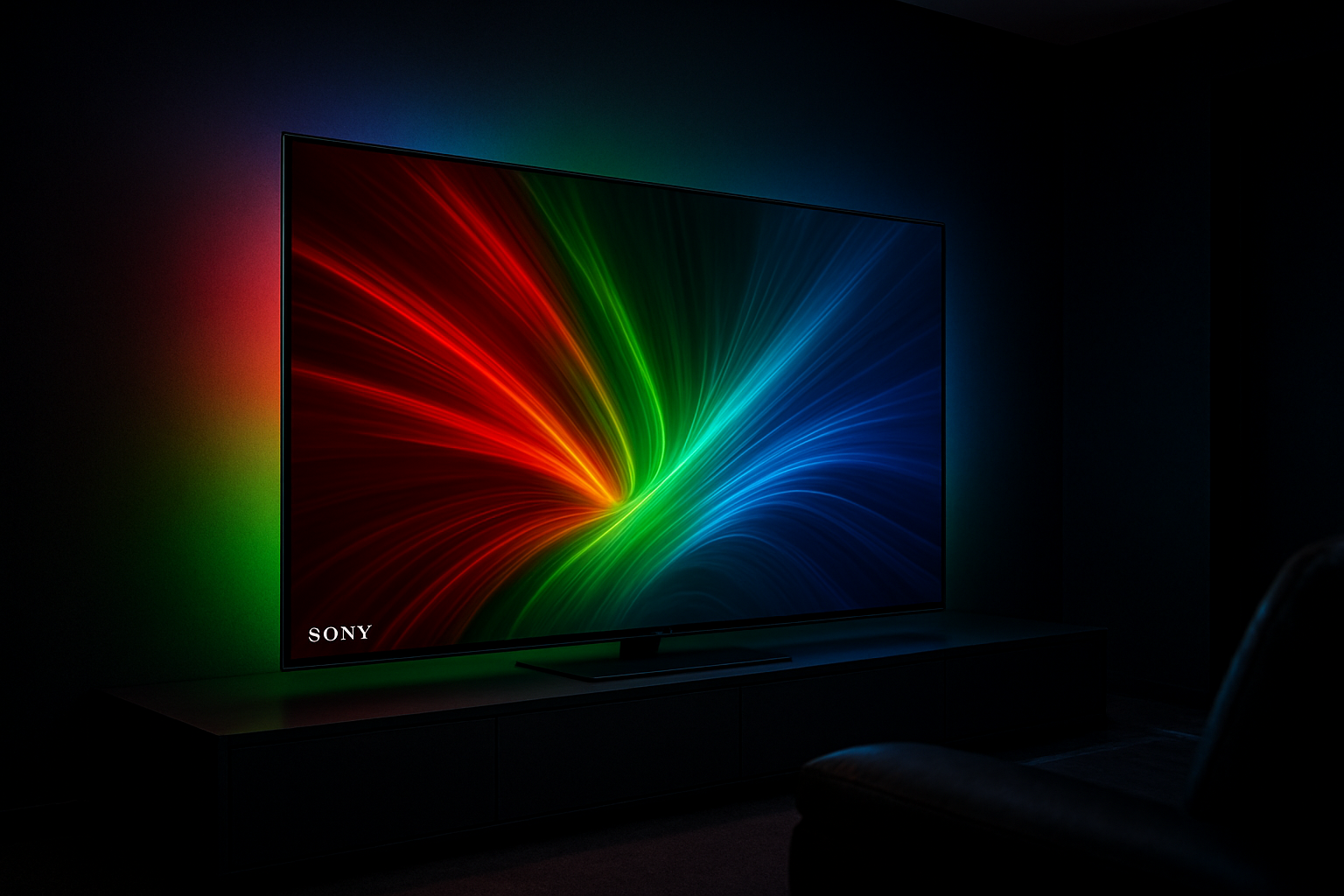
Key Points
- True RGB tech uses individual red, green, and blue LED backlights.
- Sony promises the largest color volume in its consumer TV history.
- Algorithms borrowed from professional Hollywood reference monitors.
- Significant reduction in light blooming and improved off-axis viewing.
- Full product reveal expected in spring this year.
In a strategic move to redefine home entertainment standards, Sony has officially teased its new 'True RGB' technology for Mini LED televisions. This announcement arrives amidst a backdrop of consumer confusion surrounding the display market, where brands have been juggling terms like 'Micro RGB' and 'RGB Mini LED' to describe similar underlying technologies. With 'True RGB,' Sony aims to cut through the noise and emphasize the specific hardware configuration and processing power that sets its next-gen Bravia lineup apart from the competition. At its core, the True RGB technology moves away from the standard Mini LED approach of using solid blue LEDs paired with quantum dots. Instead, it utilizes individual red, green, and blue LED backlights. By using these pure color LEDs alongside an LCD layer, the display is capable of producing much higher color accuracy and significantly increased brightness. According to Sony, this configuration allows for the largest color volume ever achieved in the history of the company’s consumer-grade televisions. It is important to note that this is not OLED; while each pixel in an OLED display acts as its own light source, these True RGB TVs still rely on an LCD layer to form the final image. However, the secret sauce for Sony lies in its image processing algorithms. The company has explicitly stated that it is borrowing technology from its professional reference monitors—the same equipment used by colorists and editors in Hollywood post-production houses. By applying these professional-grade algorithms to the LED backlight control, the TVs can manage light with extreme precision. This supposedly results in a dramatic reduction in 'blooming'—that distracting halo effect that occurs when light leaks from a bright object into a dark background—and significantly better color accuracy even when viewing the screen from an off-axis angle. Sony’s credibility in this space is backed by its deep roots in professional cinema. From the cameras used to film blockbuster movies to the monitors used to grade them, Sony has a unique perspective on how content should look. By bringing this professional expertise to the living room, Sony is positioning its upcoming Bravia True RGB TVs as the ultimate choice for cinephiles and high-end gamers who demand content fidelity. This isn't just about raw specs; it's about the 'creator's intent' being preserved on screen. While rivals like Samsung, LG, and Hisense have introduced similar RGB-based Mini LED panels earlier this year, Sony’s reliance on its proprietary processing engine may be the differentiator that matters most to enthusiasts. The display industry is currently in a transition phase, moving away from standard LED backlighting toward these more precise RGB arrangements. Sony’s decision to brand its implementation as 'True RGB' is a clear attempt to signal that their hardware-software synergy is superior to mass-market implementations. Consumers will have to wait until the spring of this year to get hands-on time with these new Bravia sets. Before then, Sony has promised to release additional technical details regarding the specific panel architecture and the AI-driven processing features that will power these displays. As we look ahead, it is clear that the battle for the living room is no longer just about resolution, but about who can best bridge the gap between professional studio quality and the home viewing experience.
Understanding True RGB Technology
True RGB technology marks a departure from traditional Mini LED designs. Instead of relying on a blue LED backlight covered by a quantum dot layer, Sony’s new approach utilizes pure red, green, and blue LEDs. This allows for significantly purer color reproduction and higher brightness levels, contributing to what the company claims is the largest color volume ever achieved in its home TV history. It is crucial to clarify that this is not an OLED display. While OLEDs benefit from per-pixel illumination, these True RGB TVs still utilize an LCD layer to form the final image. However, by using independent RGB backlights, Sony is able to achieve a level of color control and luminance that bridges the gap between mass-market Mini LED displays and professional-grade reference monitors.
Professional Processing and Image Quality
The real magic behind Sony's new displays lies in their image processing. Sony has borrowed complex algorithms from its professional reference monitors, which are the industry standard in Hollywood for color grading and content mastering. By applying this professional-grade logic to manage the RGB backlights, the TV can distribute light with extreme precision across the screen. This level of control is designed to virtually eliminate 'blooming'—the halo effect where light spills into dark areas of the image. Furthermore, it improves off-axis color accuracy, ensuring that the picture remains consistent regardless of the viewing angle. For enthusiasts, this means the 'creator's intent' is preserved more faithfully, whether they are watching a cinematic masterpiece or playing a high-fidelity video game.
This article was drafted with AI assistance and editorially reviewed before publication. Sources are listed below.