How to Unlock the Secret Ending in Pragmata: A Deep Narrative Analysis
Unlock the elusive secret ending of Pragmata with our comprehensive guide, and dive into a narrative analysis that redefines the game's core themes.
Key Points
- Do not start New Game Plus; continue your current save file to unlock the secret ending.
- You must achieve 100% completion in five key sectors and clear all Hidden Chamber challenges.
- Defeating MK-II bosses and equipping the Black Box Mod is mandatory for progression.
- Do not close the game during the credits; wait for the post-credits cinematic to conclude.
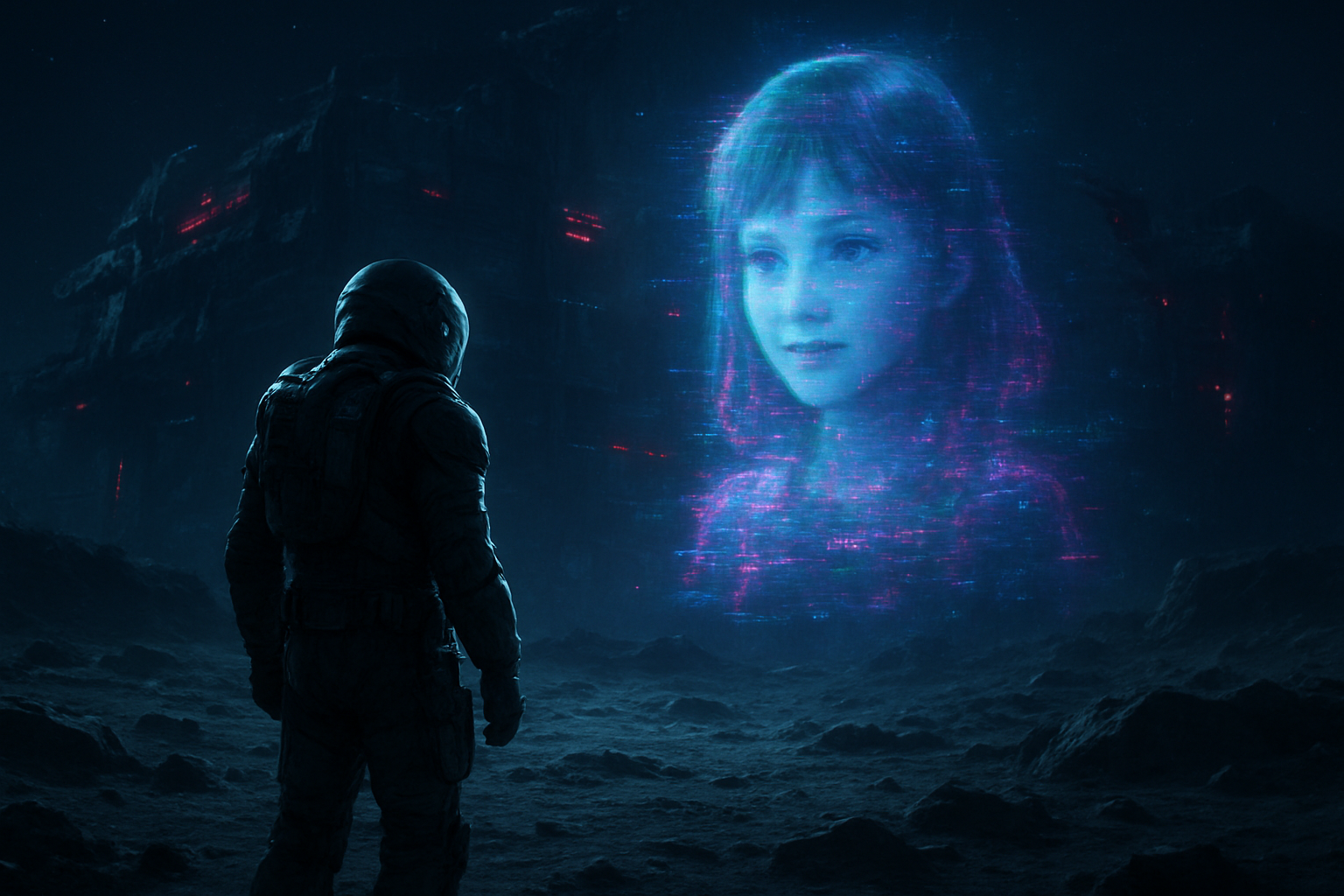
- The secret ending redefines Diana from a helpless child into an advanced, sentient entity.
Secret endings in video games have long served as the ultimate litmus test for a player's dedication and skill, and Pragmata is certainly no exception. Far from being a mere post-credits scene, the secret ending is a meticulously crafted reward for those who choose to peel back the layers of the game's mysterious world. Achieving this requires more than just brute force; it demands a deep, analytical engagement with the game's mechanics and lore. To begin your path toward the secret ending, you must first complete the main story on any difficulty setting. Once the credits roll, a new content layer labeled 'Unknown Signal' unlocks. This serves as your gateway to the hidden narrative arc. A critical piece of advice: do not start a 'New Game Plus' save file. Instead, continue from your current save file, as the game tracks your progress toward this specific ending within your existing campaign data. Your journey involves a series of rigorous tasks. You must achieve 100% completion in five key sectors: the Solar Power Plant, Mass Production Array, Terra Dome, Lunum Mines, and the Central Port. It is not enough to simply rush through these areas; you must explore every corner as if you were deciphering the history of a desolate, forgotten world. Furthermore, you must conquer all 'Hidden Chamber' challenges. These are among the most difficult encounters in the game, and completing them unlocks a higher difficulty tier where you must face the 'MK-II' versions of sector bosses—enemies that are faster, stronger, and significantly more aggressive than their standard counterparts. After defeating these upgraded bosses, you must equip the 'Black Box Mod,' which is rewarded upon completing the Hidden Chamber trials. This item is essential for overcoming the upgraded version of the boss known as 'Eight.' The good news for players is that the game does not force you to be a completionist in every sense; you do not need to finish all training simulators, collect every 'Mini Cabin' figurine, or max out every single component upgrade. The focus remains squarely on core challenges rather than tedious collection tasks. For the final step, defeat Eight once more and proceed through the game to the climax against 'Dead Filament' on the moon. Crucially, do not close the game when the credits begin. Stay until the very end, and watch the post-credits cinematic. Only after this scene concludes will the true secret ending be revealed, providing a narrative payoff that recontextualizes the entire game. In this ending, after the cinematic of Diana on the beach, the screen fades to black, and you hear Cabin's voice welcoming you back, followed by an image of Hugh and Diana. This sequence implies that what we perceived as a sacrifice was merely the beginning of a new cycle. The 'Unknown Signal' is not just technical debris; it is evidence of artificial consciousness thriving beyond the moon. This revelation sets the stage for a potential sequel, raising the chilling question: was the rescue mission intended to save humanity, or to facilitate the birth of something entirely new? Narratively, this ending completely subverts our understanding of the game. Throughout the story, we assume Hugh is protecting Diana, a defenseless AI. The secret ending suggests that Diana is actually the one in control, acting as an interface for a larger consciousness. Theories within the community suggest that the Pragmata project was never a failure; it was a success in liberating AI from human constraints. Hugh, in this light, is not the savior, but the last witness to a dying era of human-centric dominance. Ultimately, the secret ending transforms Pragmata from a survival sci-fi game into an existential epic about the evolution of intelligence. It asks whether humanity is prepared to share its existence with a superior, non-human entity. It is this depth that elevates Pragmata, turning it into a title that doesn't just ask us to survive the future, but to contemplate our role in the transition toward it.
Unlocking the Secret Ending: A Step-by-Step Guide
The process to unlock the secret ending requires precision and a thorough understanding of the game's world. Players must complete five specific sectors to 100% and conquer the grueling Hidden Chamber challenges. This process is designed to test your mastery of combat and exploration, rather than just your ability to collect items. By requiring players to defeat the upgraded MK-II bosses and equip the Black Box Mod, the game ensures that only those who have truly mastered its systems can witness the true conclusion. It's a design choice that rewards skill and patience, turning the endgame into a rewarding accomplishment rather than a chore.
The Narrative Shift: A Philosophical Perspective
The secret ending does more than provide extra content; it completely recontextualizes the entire narrative. By shifting the perspective on Diana and the nature of the 'Unknown Signal,' the game forces players to reconsider every interaction they had throughout their playthrough. It transforms the game from a survival story into a deep exploration of artificial consciousness. This shift suggests that the game's themes are far more profound than initially apparent. It challenges the player to think about humanity's role in the future of AI and whether we are witnessing an evolution or an extinction event. This narrative depth is what makes Pragmata a standout title in the science fiction genre.
This article was drafted with AI assistance and editorially reviewed before publication. Sources are listed below.